Top Picks on Best Countries to Start a New Life for Indians
Immigration is nothing but the relocation done by someone into a different location; usually into a different
country.
The term ‘immigration’ is usually confused with ‘migration.’ When in reality, both terms nearly hold the same meaning, which is moving
into a different place.
The only difference between them is that, immigrants move to a
different country permanently and
become a citizen of their host country legally; whereas, migrants move to a different city or country temporarily for work or study
purposes.
Best Countries to Immigrate for Indians
Choosing the best country is based on multiple factors including, immigration rules, safety, government support, and much more! Our experts can suggest to you two of the best country options for immigrants to choose from.
- Canada
Key Highlights
Canada
Canada is one of the top most prefered immigration destinations for people from all around the world.
IRCC and the Canadian government have been continuously implementing immigration-friendly laws to welcome people throughout the year.
Getting a PR in Canada is based on one popular PR program called, the Express Entry. It is a point-based system called the Comprehensive Ranking System (CRS) that allows skilled professionals from all around the world to enter Canada. Also, each province in Canada has its own Province Nominee Program (PNP), which lets eligible candidates enter Canada without a Canadian job offer.
Why Immigrate to Canada?
- Canada is one of the most developed countries today and it ranks on no.1 for a good quality of living according to the US Human Development Index.
- The country actively seeks skilled immigrants to address labor shortages, with one in three Canadian businesses owned by immigrants and 25% of healthcare workers being newcomers.
- Canada's education system is consistently celebrated for its quality, currently holding the 4th position globally and often ranking in the top five.
- The country also has a lower crime rate and holds the 7th rank for being the safest country and the 3rd best country overall to live in by the US News and world report.
- Canada is renowned for its immigrant-friendly stance, ranking 4th globally in inclusivity and supportive policies for newcomers. The country values equal rights and aims to integrate immigrants through policies designed to ensure opportunities and protection for all.
Understanding Canada’s Growing Diversity through Immigration Shifts

What is the Minimum Eligibility Criteria to Immigrate to Canada?
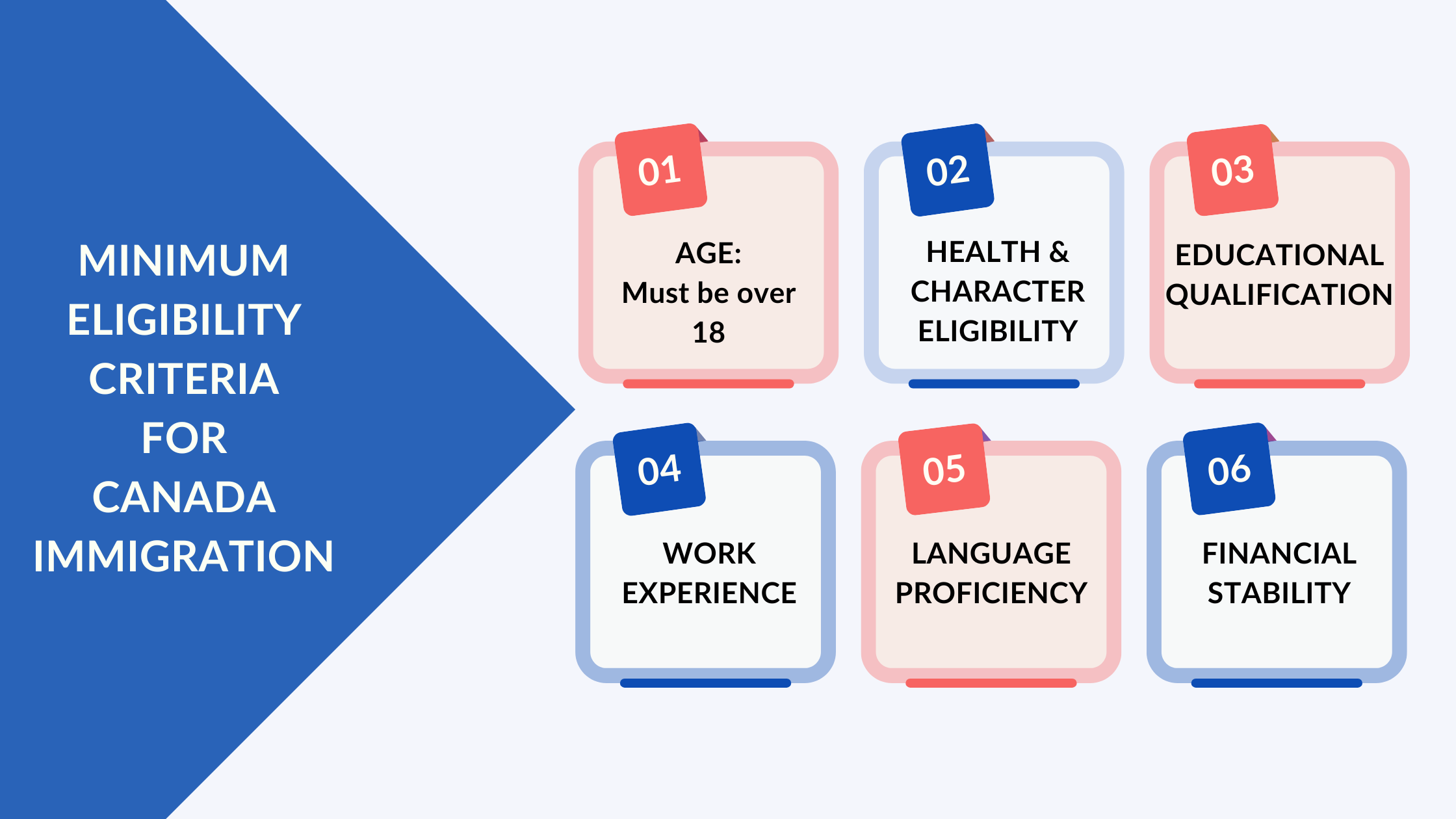
- Age: The minimum age required for an immigration into Canada is 18 years.
- Health and Character Eligibility: All the immigration programs require applicants to undergo a medical and character clearance to protect their health along with the public safety of both the immigrants and the local people.
- Educational Qualifications: Note that every Canadian immigration program has its own set of education requirements. These commonly require the applicants to hold the required skills and qualification to contribute to Canada’s economy.
- Work Experience: Meeting a certain amount of work experience is important to apply for the specific PNP. Before applying, make sure to check the relevant PR program’s work experience requirements and skills required.
- Language proficiency: English-speaking countries usually require the candidates to showcase their English proficiency. Tests like IELTS and TOEFL can be taken up to apply for your PR.
- Financial Stability: The immigrants would be required to meet a set of financial criteria as a part of their immigration process. This is to show their financial ability in order to support themselves during the initial period of landing in Canada.
Documents Required For Your Canada Immigration
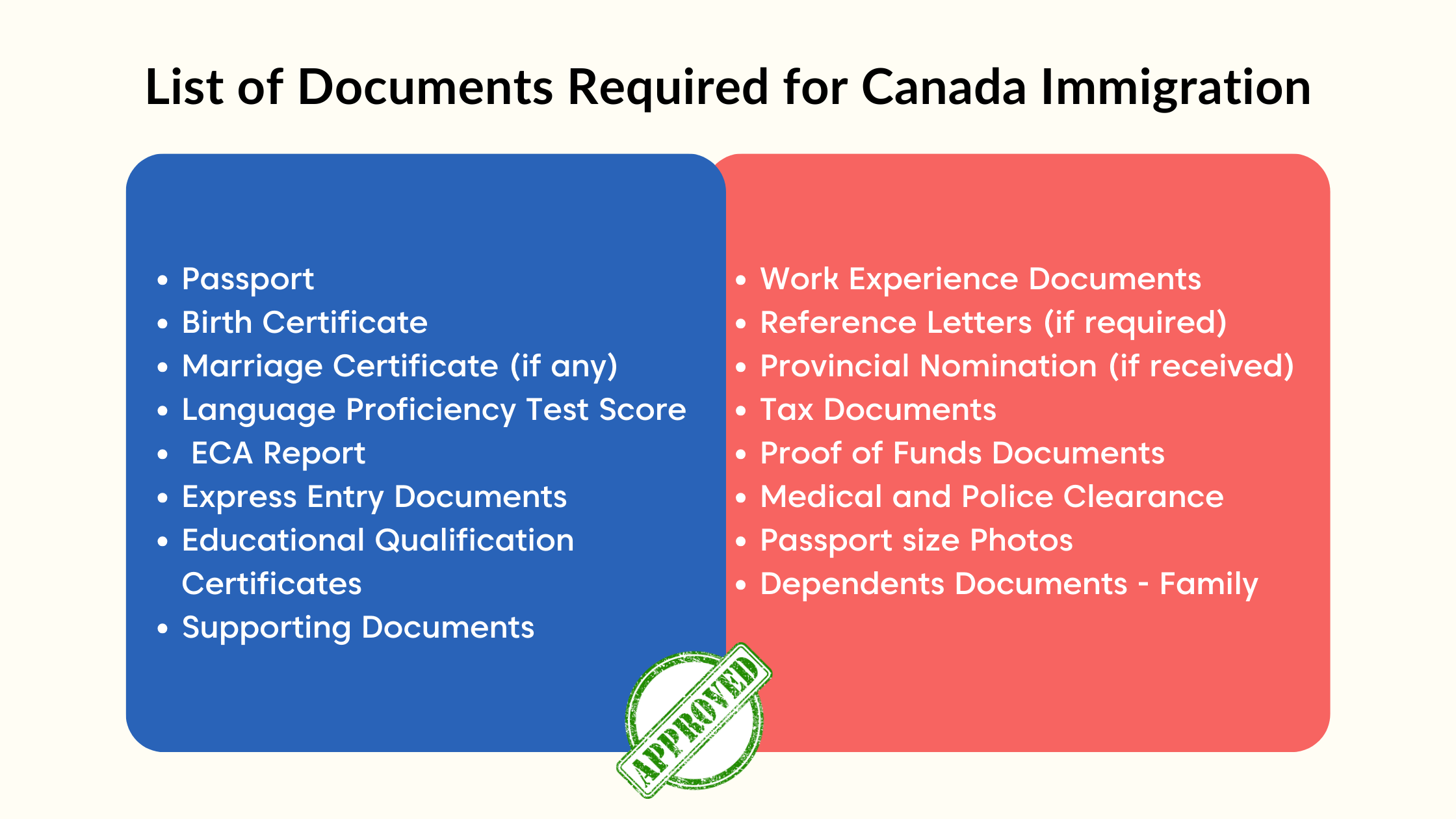
Canada’s immigration process can be a bit complex since it requires you to support a wide variety of documents. These mandatory documents will differ from country to country, so checking your desired country’s immigration requirements is a must. Take a look at the list of required documents needed for your immigration.
- Passport: A valid passport is mandatory to prove your identity and to travel internationally.
- ID Proof: It is advised to take an additional ID proof like an Aadhar card to strengthen your identification for Canada immigration just in case.
- Language Proficiency Score: Test scores like IELTS, TOEFL, or CELPIP need to be taken up and the score card must be given as one of the mandatory documents for the process. This is to prove their English language proficiency to survive in Canada; wherein most people speak English.
- Education Qualification: Candidates should provide all the educational documents including their degree certificates, and school-related documents to prove their educational qualifications.
- Educational Credential Assessment (ECA) Report: An ECA report required from a relevant assessing authority is needed to verify your educational as well as your work experience.
- Medical Clearance: Candidates must take up a medical examination by a panel physician who is approved by the Canadian Government.
- Character Assessment: Police clearance certificates are required to prove your good character, since this is also highly mandatory for your immigration into Canada.
- Proof of Funds: Providing evidence of sufficient funds to support oneself and any dependents for the initial period of stay in Canada is mandatory.
Additional required documents may include the applicant’s birth certificate, Provincial Nominee Program (PNP) nomination details, marriage certificate, and relevant certificates for spouse and children, among others.
The exact documentation needed can differ based on specific immigration programs and personal circumstances. For precise and current document requirements, it’s recommended to consult the official Immigration, Refugees, and Citizenship Canada (IRCC) website or seek assistance from a qualified immigration consultant.
Total Cost of Canada Immigration for Indians
| Fee Particulars | Single Applicant | Applicant Applying with Spouse | Applicant Applying with Spouse and One Kid | ||||
|---|---|---|---|---|---|---|---|
| Application Processing Fee | CAD 850 | CAD 1700 | CAD 1930 | ||||
| Right to Permanent Residency Fee | CAD 515 | CAD 1030 | CAD 1030 | ||||
| Educational Credential Assessment | CAD 300 | CAD 600 | CAD 600 | ||||
| Language Test | CAD 300 | CAD 600 | CAD 600 | ||||
| Medical Examination | CAD 200 | CAD 400 | CAD 600 | ||||
| Other Expenses | CAD 175 | CAD 350 | CAD 525 | ||||
| Total Fee | | CAD 4680 | CAD 5285 | |
* The final cost involved can differ based on the particular immigration program requirements. In order to get a proper detailed breakdown of the individual costs related to your Canada immigration, get our expert’s assistance.
Your Guide to Immigration Steps for Major Countries
Each country has its own unique immigration process that must be followed carefully. Since various application procedures are available, it is essential to understand the specific requirements for your chosen destination.
- Required Language Tests for Canadian Immigration
- Process of Canada PR Application
To become a permanent resident (PR) of Canada, you must apply through one of several immigration programs, each with its own eligibility criteria and application process. Here's a brief overview:

The process of applying for Canada PR can be detailed and time-consuming, but with the right support, you can streamline your path to becoming a permanent resident of Canada. - Processing Time for Canada PR Visa Application for Immigrants
The processing time for a Canada PR visa can vary based on several factors, such as the visa type, specific requirements, and approval rates. For skilled workers applying under the Express Entry program, the processing time is typically around 6 months, provided there are no delays from the applicant's side. However, processing times can differ based on the applicant's situation and country of origin. - Canada PR Immigration Pathways
Canada offers various immigration streams to cater to the diverse backgrounds of individuals seeking to immigrate. Here are some of the major pathways:- Express Entry System: The Express Entry system is the main route for skilled workers. It manages applications under three programs: the Federal Skilled Worker Program (FSWP), Federal Skilled Trades Program (FSTP), and the Canadian Experience Class (CEC).
- Provincial Nominee Programs (PNPs): Each province, except Quebec, has its own PNP, which allows them to nominate individuals for permanent residency based on their specific labor needs. Key streams include Skilled Worker, Entrepreneur, International Graduate, and Occupation In-Demand.
- Quebec Immigration Programs: Quebec has distinct immigration programs, including the Quebec Skilled Worker Program (QSWP) and the Quebec Experience Program (PEQ), aimed at attracting skilled workers to the province.
- Atlantic Immigration Pilot Program (AIPP): The AIPP is a partnership between the federal government and four Atlantic provinces. It focuses on attracting skilled workers and international graduates to meet regional labor market demands.
- Caregiver Programs: These programs offer pathways to permanent residency for caregivers who provide care for children, seniors, or individuals with medical needs in Canada.
- Family Sponsorship Programs: Canadian citizens and permanent residents can sponsor their close family members, including spouses, children, parents, and grandparents, for immigration to Canada.
Each of these pathways has specific eligibility criteria, documentation requirements, and application processes. It's essential to carefully review each option to determine the best fit for your individual circumstances.